
Solutions-focused mindset essential for sustainable future
Rather than dwelling on problems, a solutions-centered focus — within individuals, organizations, governments, etc — naturally leads to breaking negative feedback loops, feelings of hopelessness, and cycles of redundant and unproductive work. Read more https://sustainablebrands.com/read/leadership/why-a-solutions-focused-mindset-is-essential-for-creating-a-sustainable-future
Iberian lynx and climate change
This cool video introduces a research project which tries to understand how species interactions are affected by global change, showcasing Iberian lynx and its prey in Spain, such a wonderful way to spread the word using animation. https://www.youtube.com/watch?v=mMyuswFMEBQ&feature=youtu.be
Zebra coloration messes with fly eyes
I just listened to a nice podcast on Scientific American on the evolution of zebra coloration. Horseflies misjudge landing on zebra patterns compared with solid grey or black surfaces, which provides evidence for why evolution came up with the black and white pattern. Do not worry, it is just 3 minutes. Enjoy listening: https://www.scientificamerican.com/podcast/episode/zebra-coloration-messes-with-fly-eyes/
Navigating the Anthropocene

I recently attended an interesting seminar, presented by Prof Ruth DeFries (Columbia University, USA). In this seminar, she explored the themes of her forthcoming book: What Would Nature Do? She elucidates four general principles from natural systems than can help us design better and more resilient societies for the Anthropocene. They include: 1. Architecture of […]
Vertical relief for leopards
Our new movement ecology paper out in the journal Oikos, investigating the influence of vertical relief and 3D landscape features on home range patterns of Persian leopards in NE Iran. Most studies that estimate home range consider only a bivariate frequency distribution represented by a 2D planimetric surface, assuming that the animals inhabit landscapes that […]
Understanding debates about Asiatic cheetah conservation through
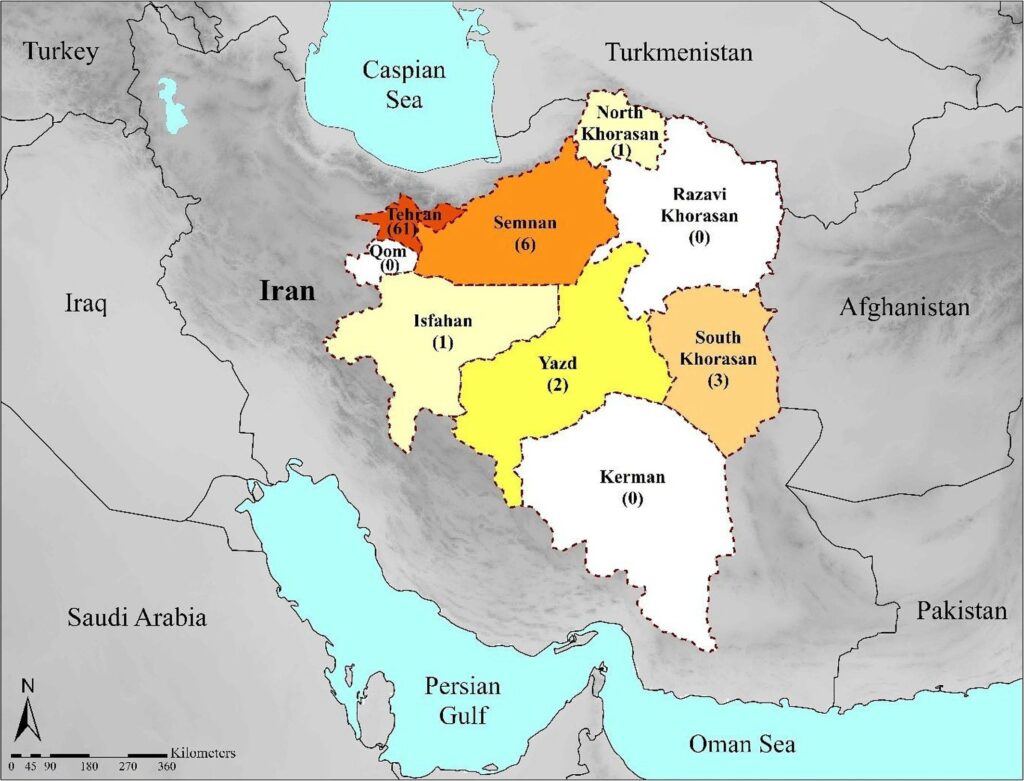
New #OA Paper Alert! “Understanding debates about Asiatic cheetah conservation through media analysis” With #Mahshid_Hosseini, @meredithgore and @DNayeri In this paper, we analyzed 91 interviews by 44 conservation stakeholders (academics, government, and NGO) in Persian-language media from January 2018 to December 2020. There is a heated debate on Asiatic cheetah conservation paradigms: In situ […]
Still a long way ahead of conservation in Asia
While doing literature review for a paper, I realized that Asian countries in total have one of the lowest %land protected while maintaining high rates of PA downgrading, downsizing, and degazettement. Asian mountains are some of the least studied ecosystems of the world, according to a recent(ish) study on publication bias based on over 1 […]
Effectively leading interdisciplinary researches
What qualities and skills do leaders of interdisciplinary and transdisciplinary research organisations need? Leaders of interdisciplinary and transdisciplinary research organisations need the qualities that make any leader successful—creativity, humility, open-mindedness, long-term vision, and being a team player. In addition, we identified eight leadership attributes that are specific to interdisciplinary and transdisciplinary interactions and that help […]
Understanding decision-making in leopards
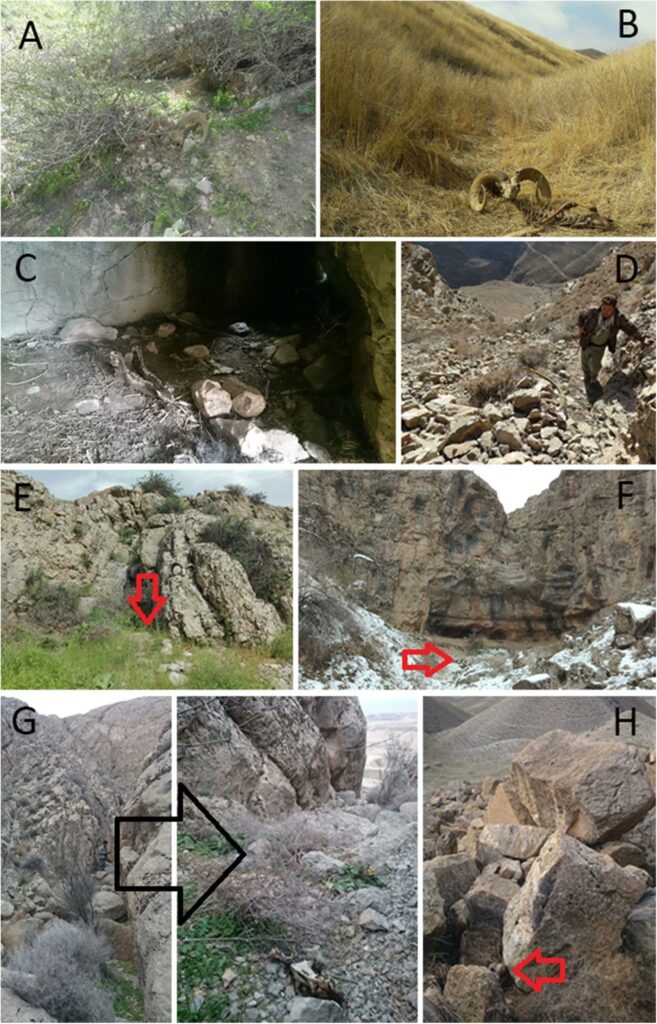
Our new movement ecology paper out in the journal Movement Ecology, exploring decision-making across different life stages in food caching Persian leopards in mountains of Iran. Tackling behavioural questions requires identifying points in space and time where animals make decisions and linking these to environmental variables This is extremely difficult in rugged mountains, species are […]
Endangered cheetahs can return to Indian forests?
India used to have “Asiatic cheetahs”, but all discussions so far have been around the “cheetah” part. Some thoughts on the “Asian” part of the debate: Last Asiatic cheetahs still persist in Iran. How many? Nobody knows, but definitely fewer than 40. Any idea of population trend: several indices confirm “decreasing” population trend. Iran tries […]